
From Babylonian astrology to modern personality assessments, people have sought ways to understand their differences. This timeline traces milestones including the four temperaments, Jung’s psychological types, Myers-Briggs, the Enneagram, and the Big Five. It concludes with Zodian, which uses four elements and sixteen animal archetypes to make personality preferences memorable.
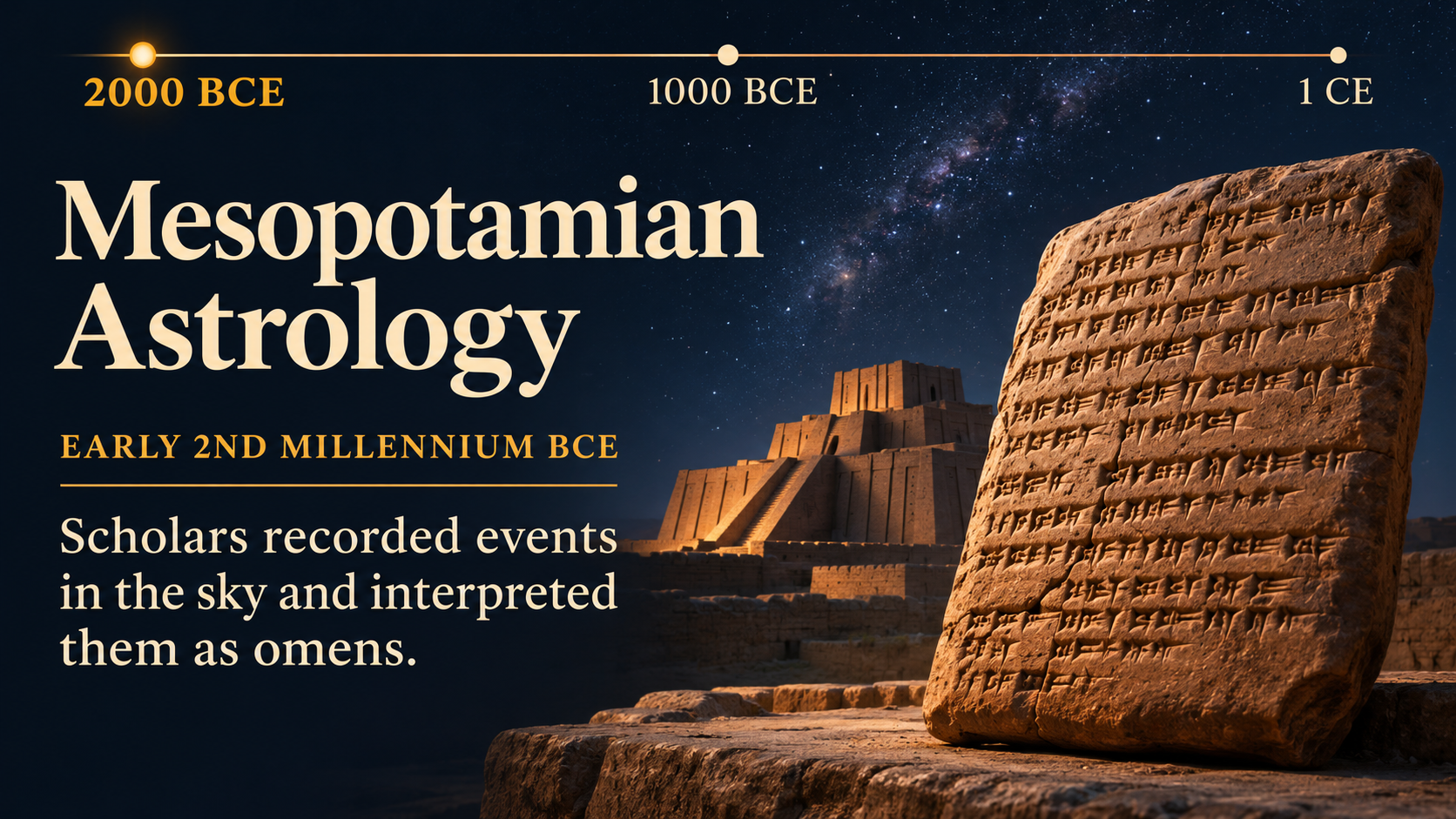
Mesopotamian scholars watched the sky for signs of what might happen on Earth. They recorded eclipses and the movements of the Moon and planets on clay tablets, interpreting them as omens for kings and kingdoms. Centuries later, Babylonian scholars developed the twelve-sign zodiac and began casting horoscopes for individual births.
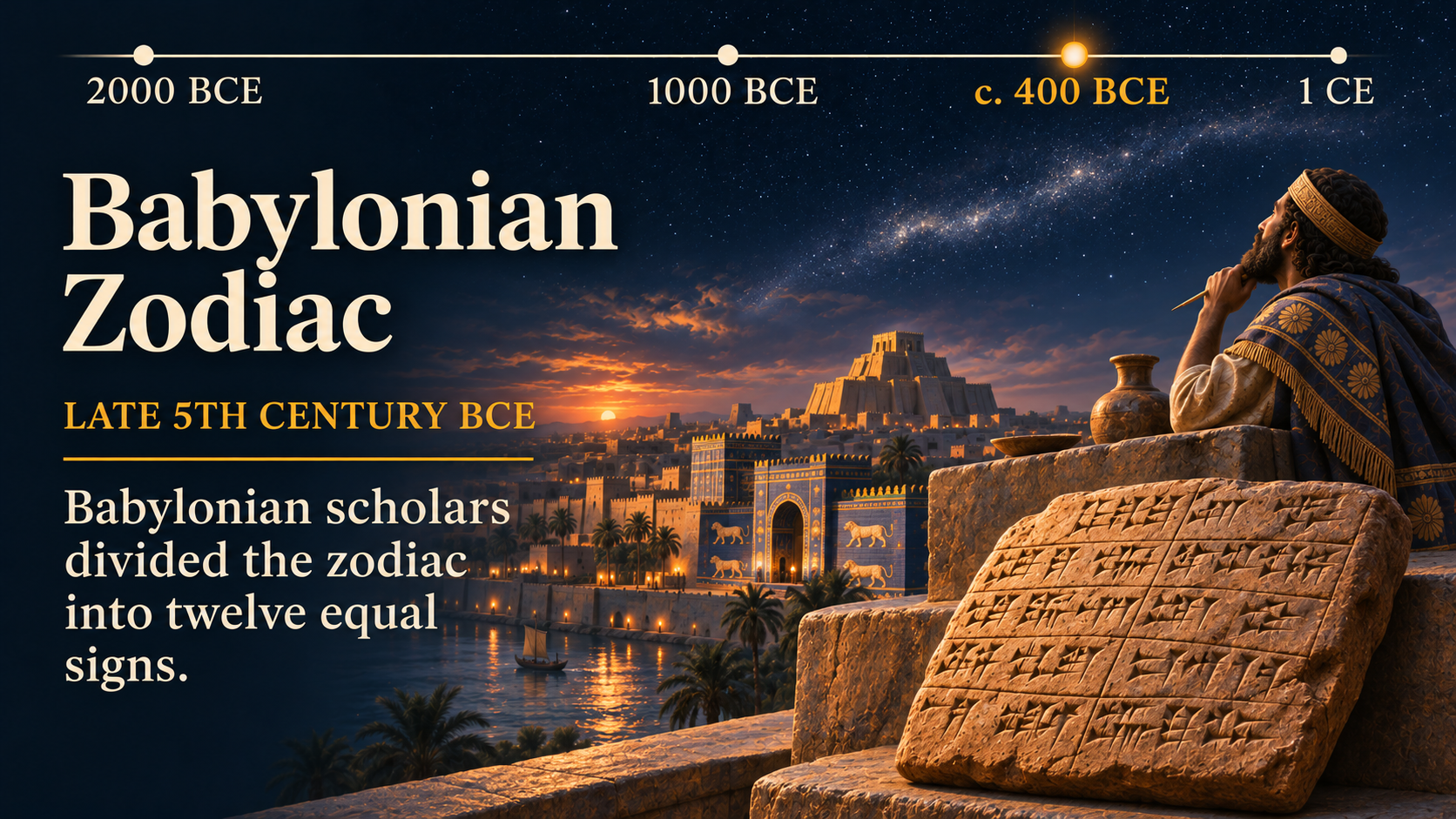
In the late fifth century BCE, Babylonian scholars divided the Sun’s apparent path into twelve equal sections, each spanning thirty degrees. They used these signs to record the positions of the Moon and planets. The oldest surviving Babylonian birth horoscope dates to 410 BCE, showing how scholars used the system.
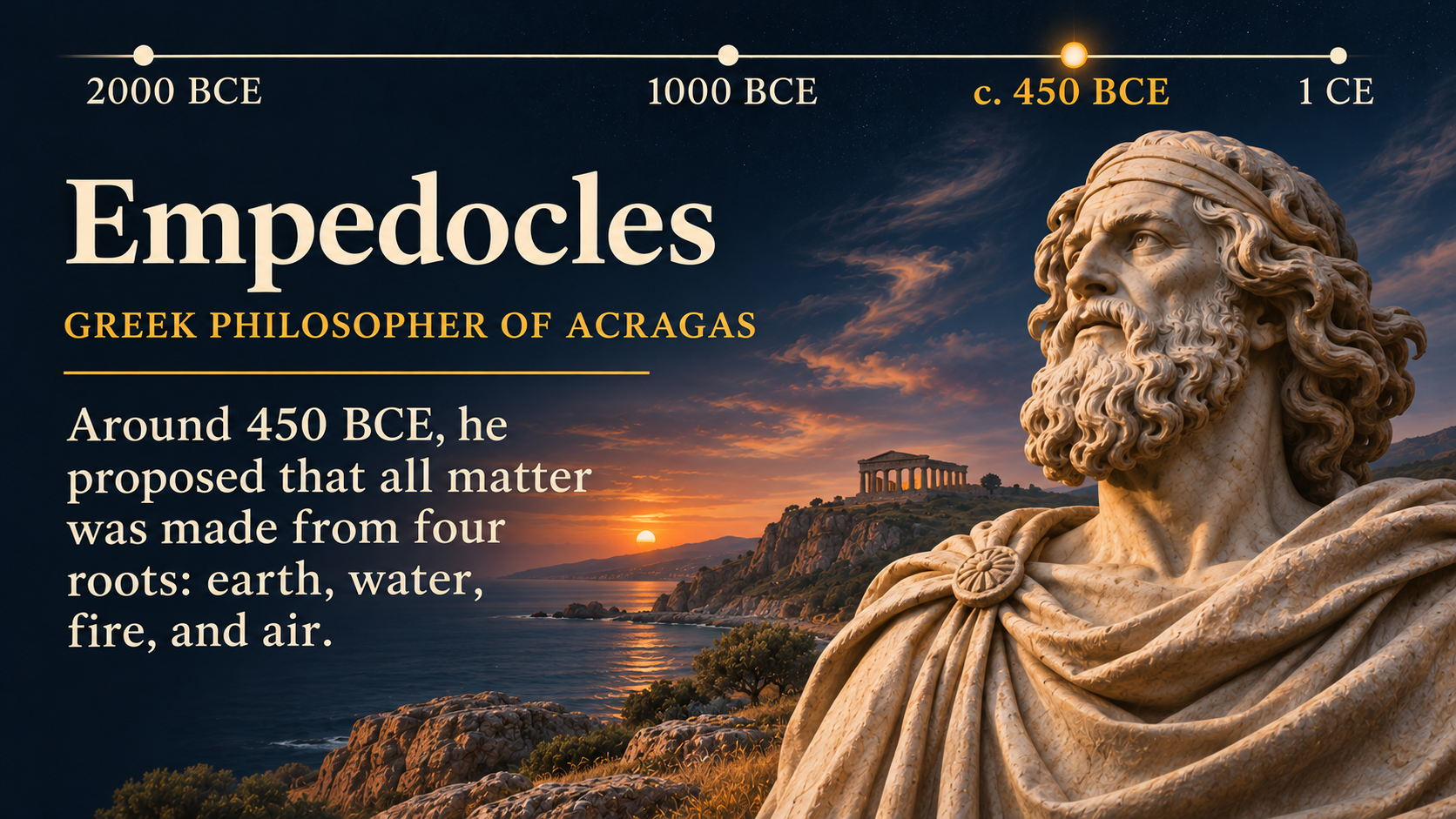
Around 450 BCE, the Greek philosopher Empedocles proposed that everything was made from four “roots”: earth, water, fire, and air. He believed two forces, Love and Strife, brought these roots together and pulled them apart. Different mixtures explained how things could change while their basic ingredients remained the same.
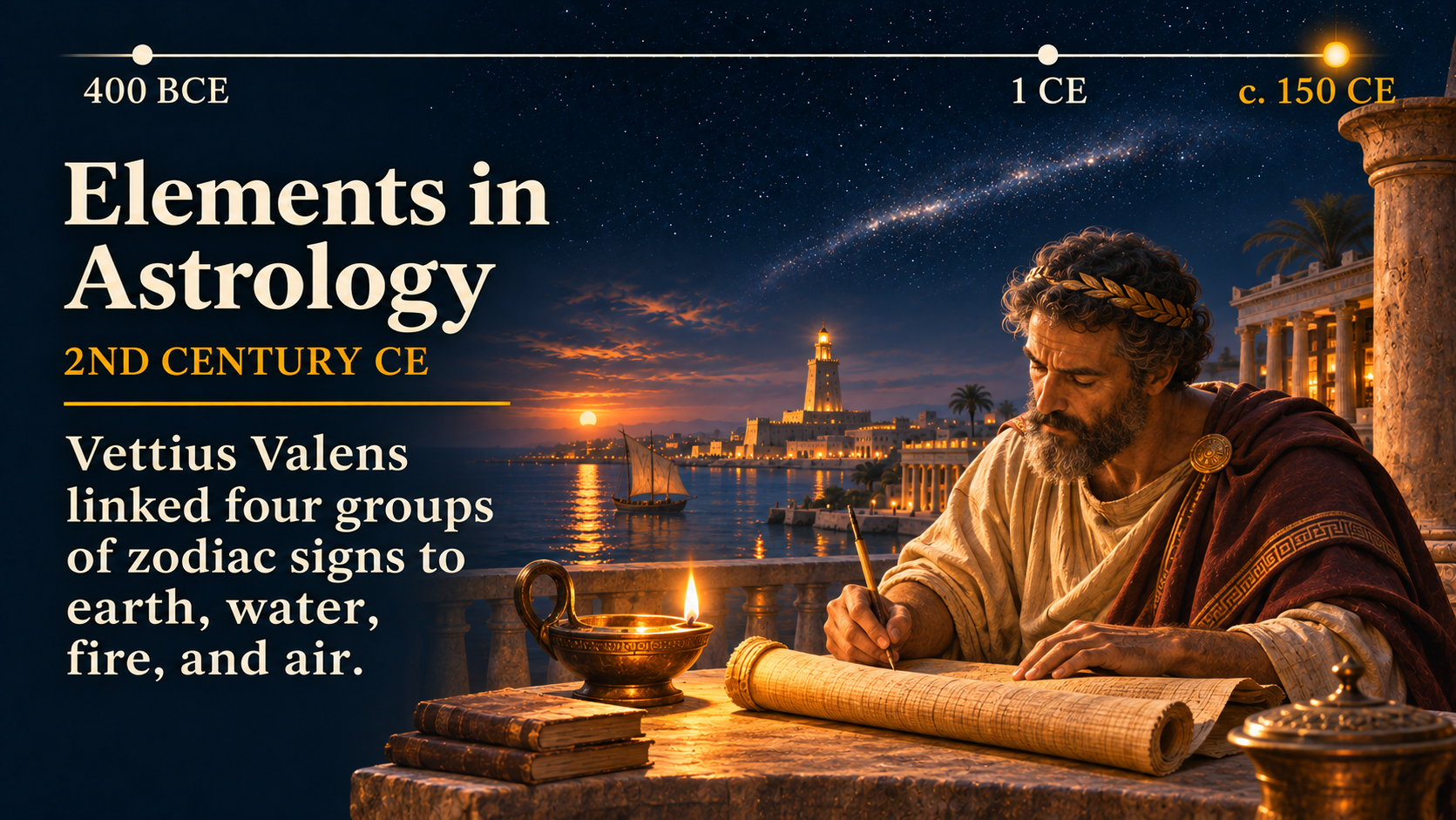
In the second century CE, the Greek astrologer Vettius Valens documented how the twelve zodiac signs were grouped into four sets of three. Each set, called a triplicity, corresponded to one classical element: earth, water, fire, or air. His writings preserve the earliest known account of all four elemental pairings.
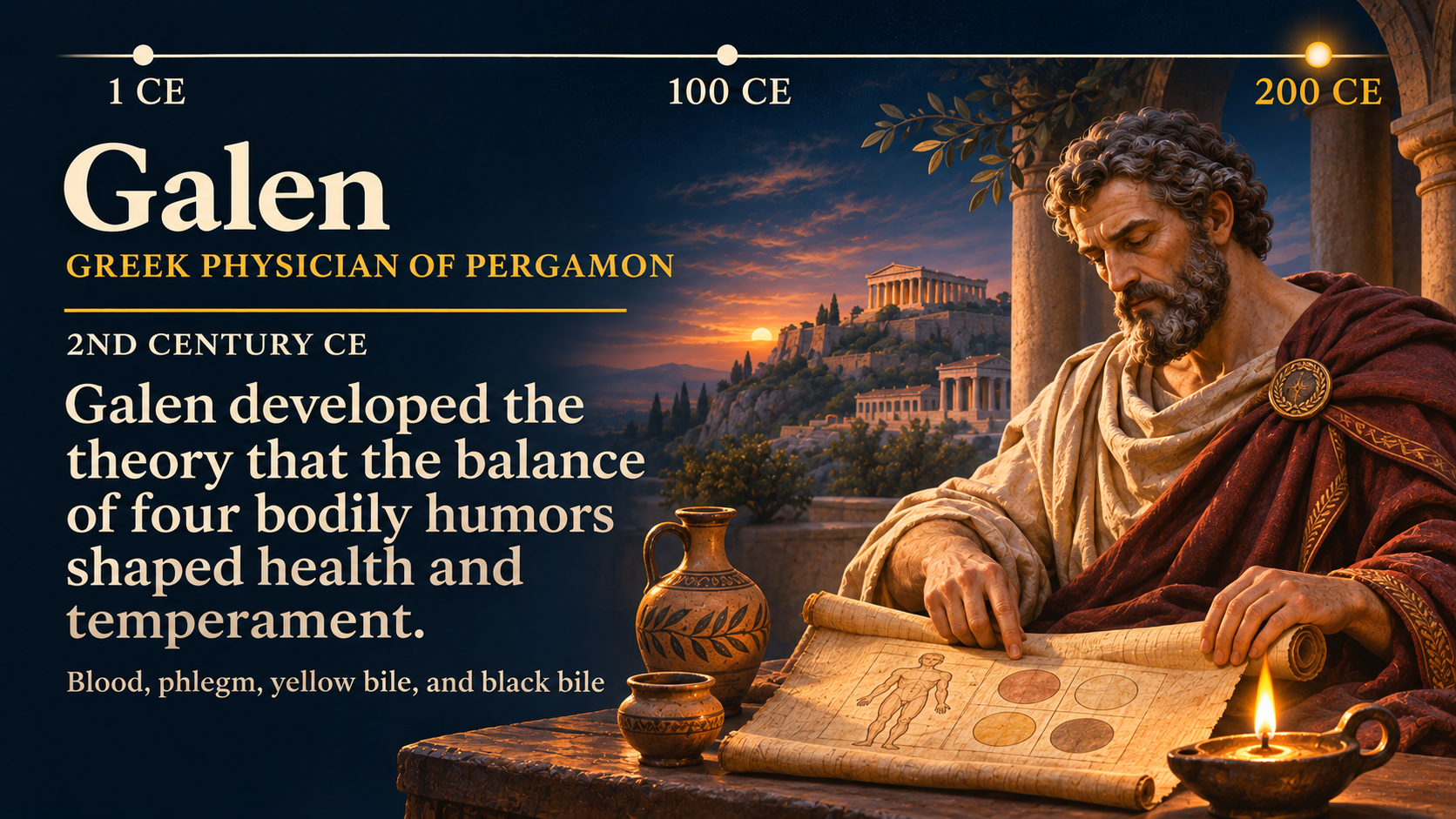
n the second century CE, Galen, a Greek physician from Pergamon, built on an earlier theory of four bodily humors: blood, phlegm, yellow bile, and black bile. He believed their balance shaped health and temperament. For centuries afterward, his ideas influenced how physicians explained differences in people’s moods and behavior.
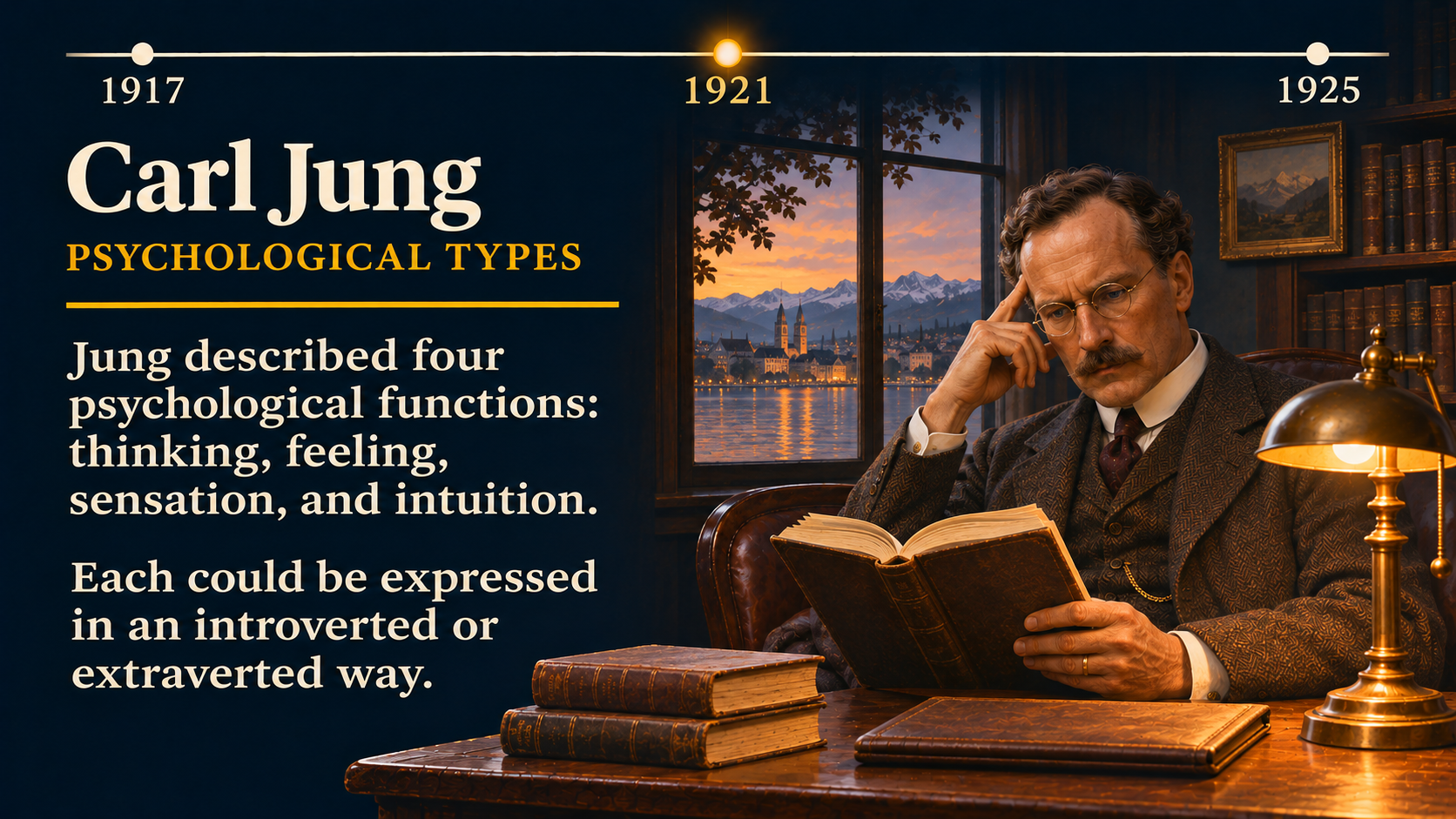
In his 1921 book Psychological Types, Carl Jung described four psychological functions: thinking, feeling, sensation, and intuition. He proposed that each function could be expressed in an introverted or extraverted way. His theory offered a framework for understanding how people take in information and make judgments, later influencing the MBTI.
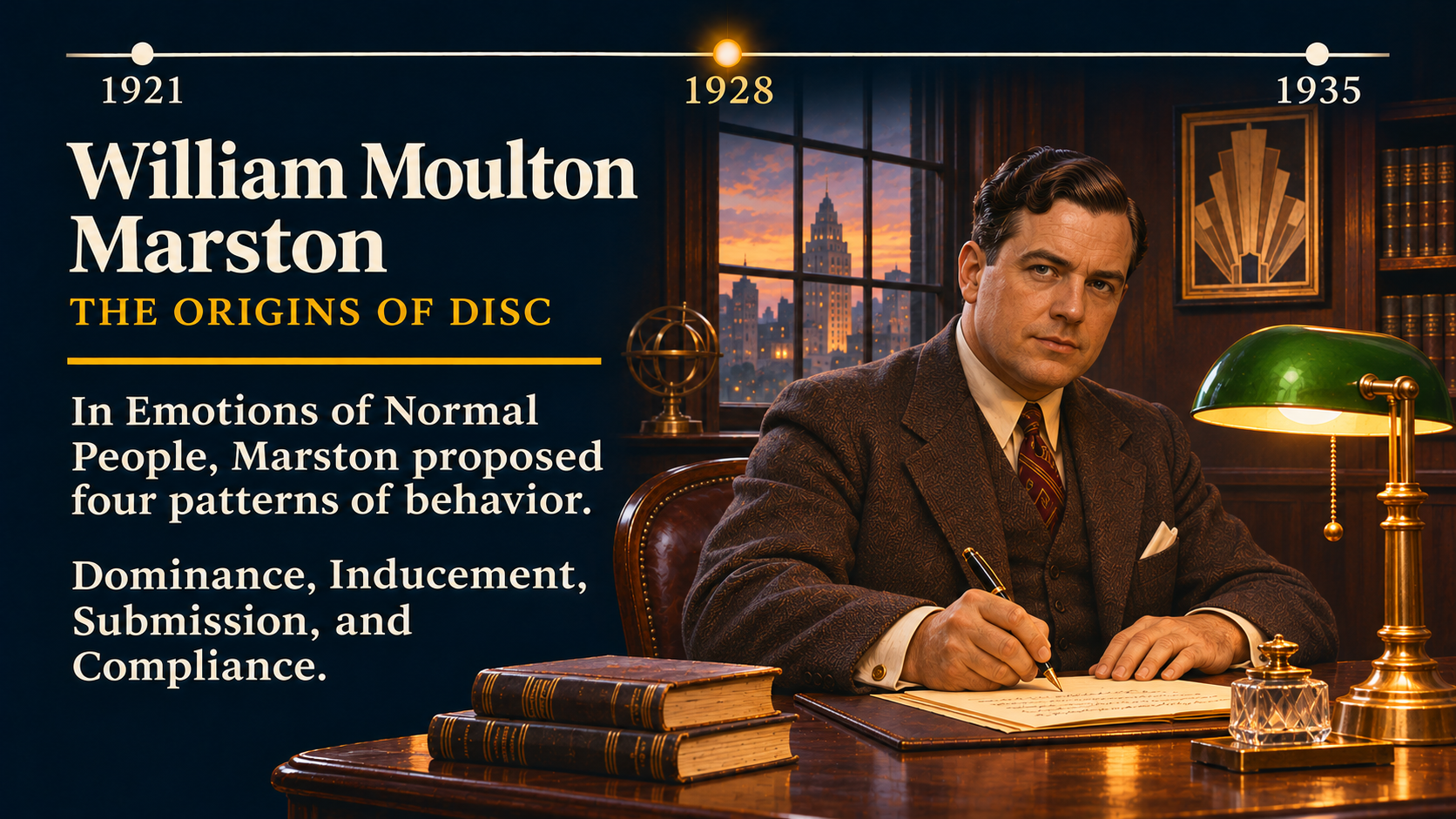
In 1928, psychologist William Moulton Marston published Emotions of Normal People. He described four ways people express emotions through behavior: Dominance, Inducement, Submission, and Compliance. These categories became the basis for DISC. Later researchers developed assessments based on his ideas to help people understand how they interact with one another.
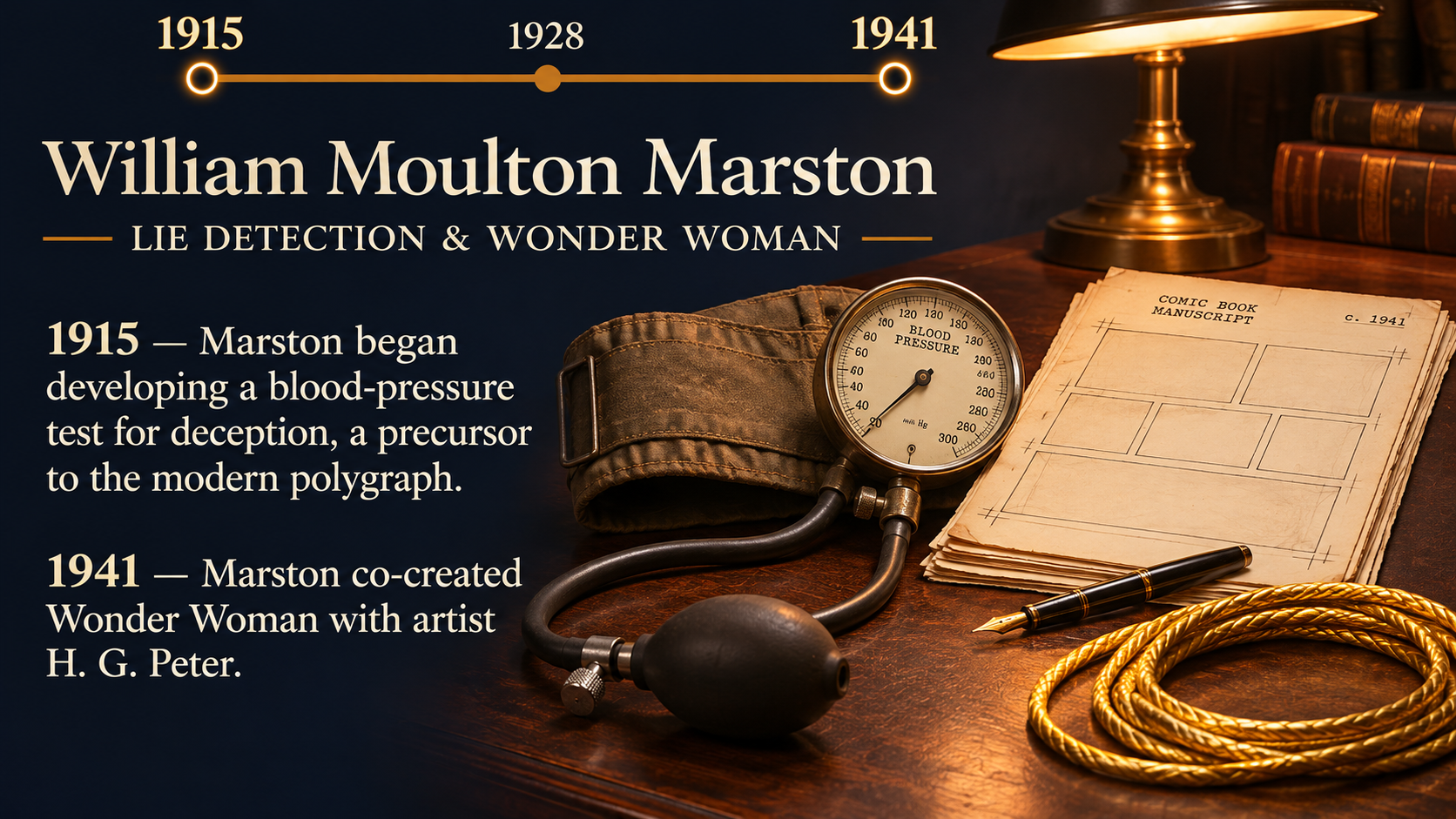
In 1915, William Moulton Marston began developing a test that used changes in blood pressure to look for signs of deception. His work helped lay the groundwork for the modern polygraph. In 1941, he and artist H. G. Peter introduced Wonder Woman, whose signature lasso would later compel the truth.
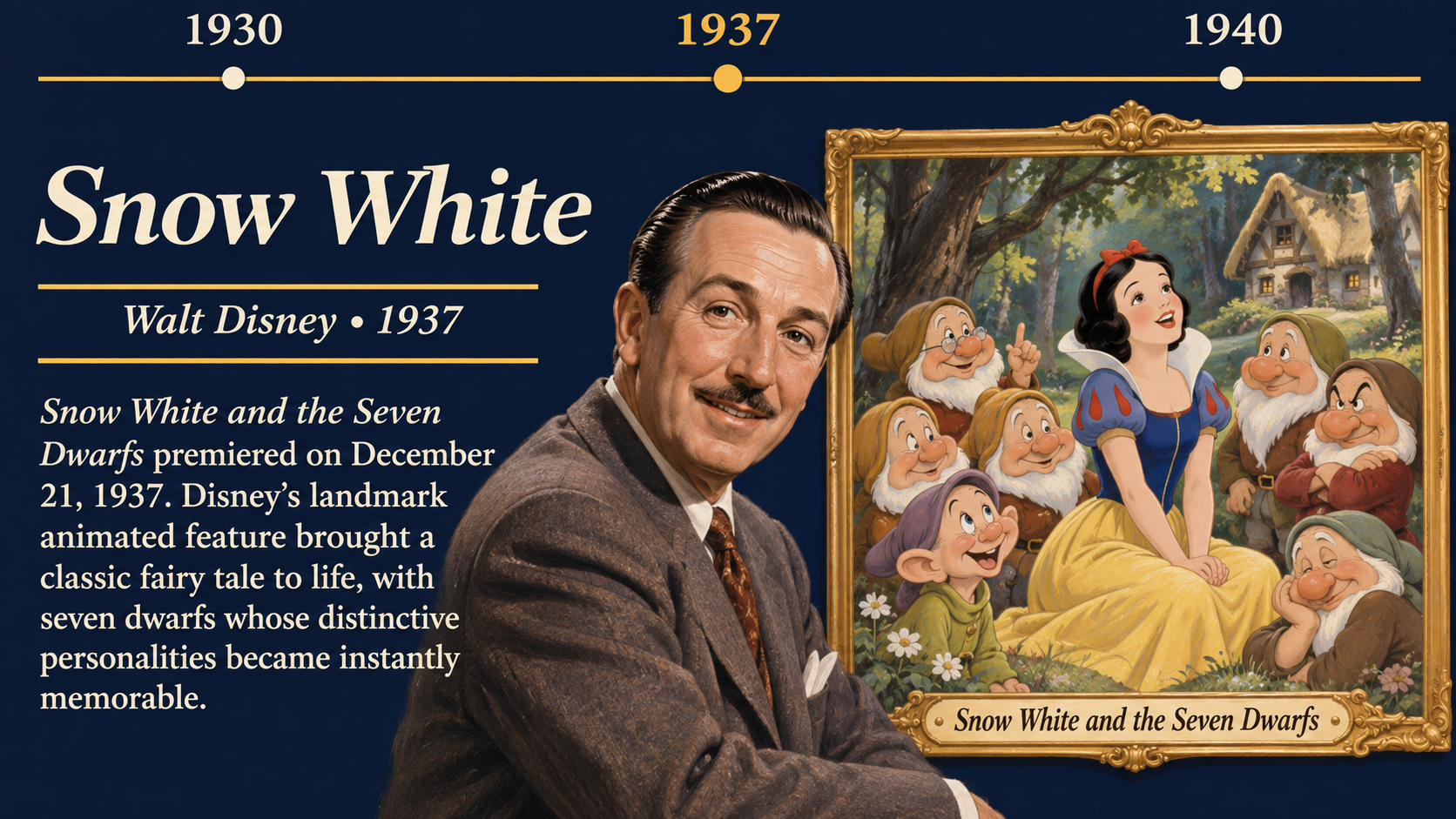
Walt Disney’s Snow White and the Seven Dwarfs premiered on December 21, 1937. This landmark animated feature brought a classic fairy tale to life through expressive characters. Doc, Grumpy, Happy, Sleepy, Bashful, Sneezy, and Dopey demonstrated how distinctive traits make fictional personalities easy to recognize, remember, and connect with emotionally.
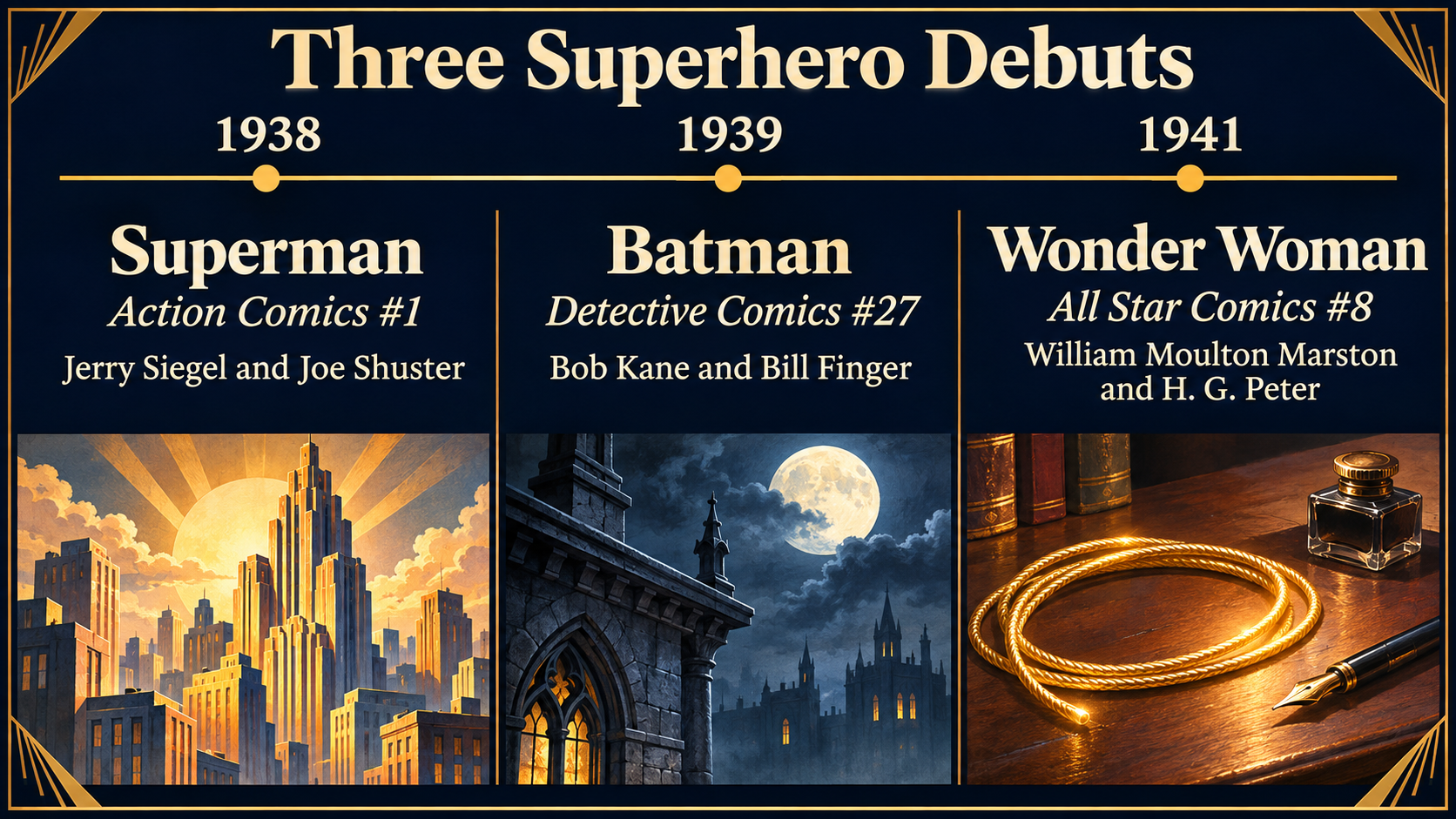
Superman debuted in Action Comics #1 in 1938, and Batman followed in Detective Comics #27 in 1939. Wonder Woman arrived in All Star Comics #8 in 1941. Together, they helped define the superhero genre through three distinct figures: a hero with superhuman powers, a masked detective, and an Amazon warrior.
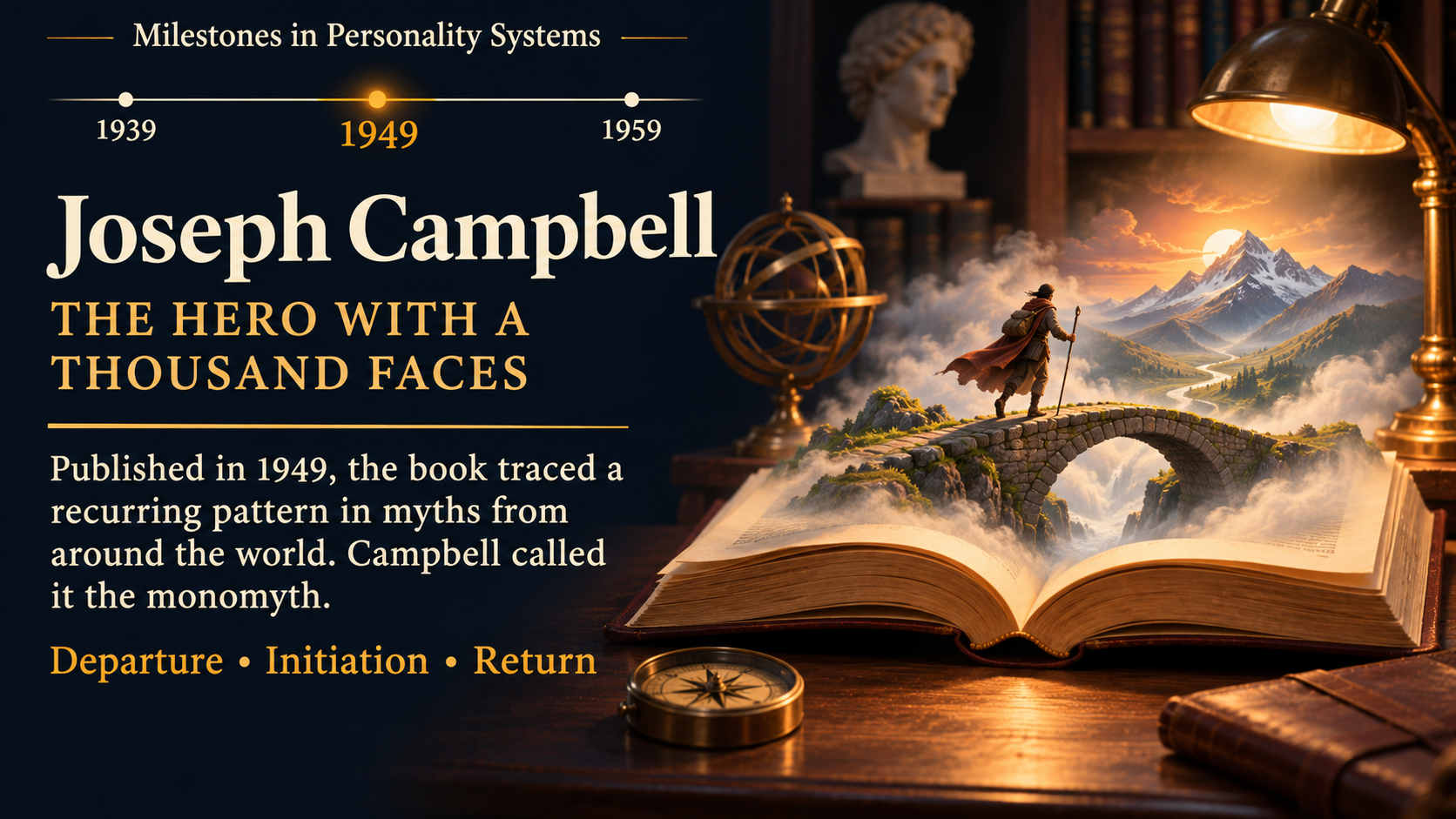
In 1949, Joseph Campbell published The Hero with a Thousand Faces, identifying a recurring pattern in myths from around the world. He called it the monomyth. The hero leaves familiar surroundings, faces trials that bring change, and returns with something to share. Campbell named these stages departure, initiation, and return.
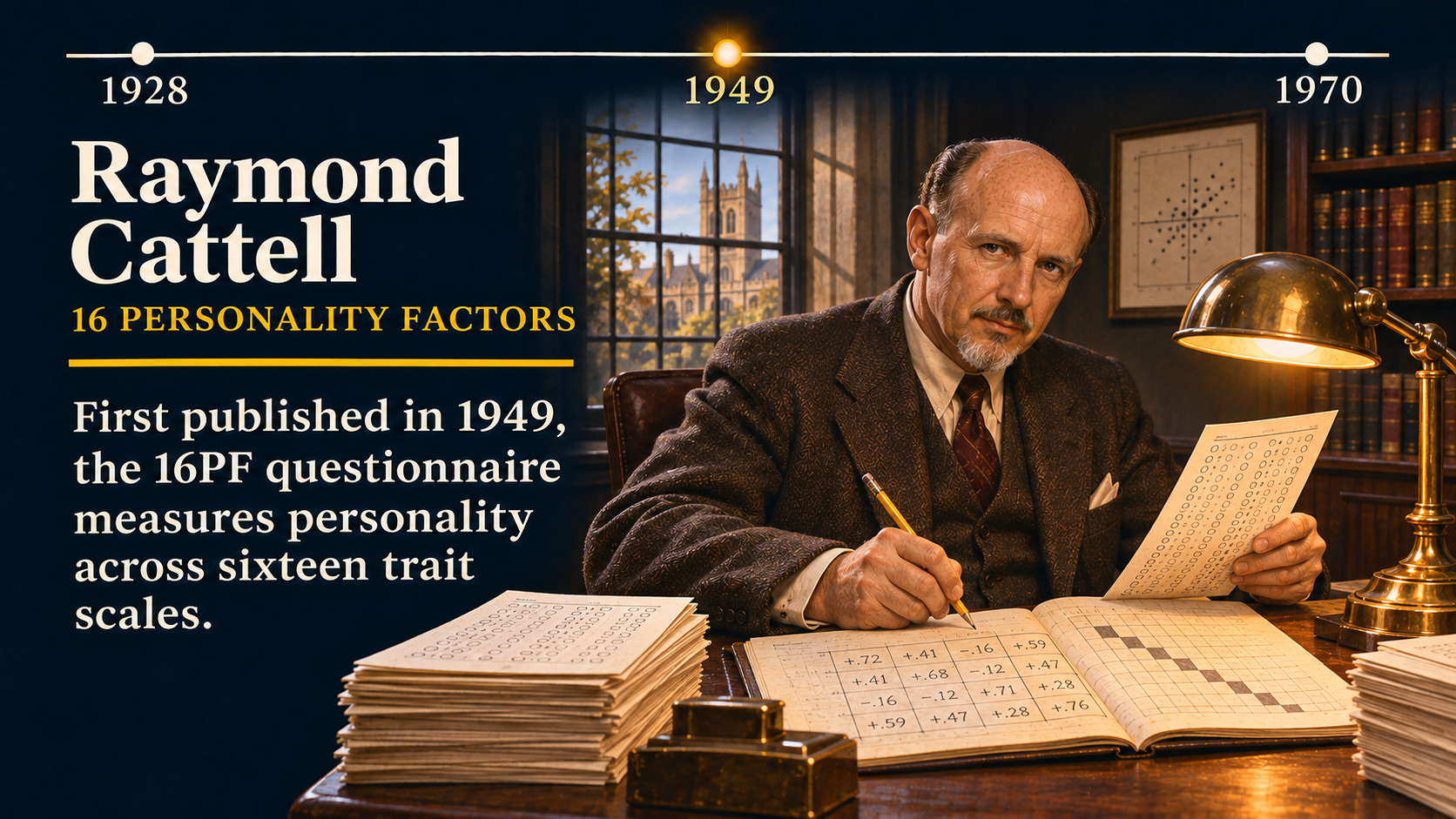
In 1949, Raymond Cattell’s Sixteen Personality Factor Questionnaire was first published. Cattell used factor analysis to look for patterns in personality ratings. The questionnaire gives each person a score on sixteen scales, including warmth, dominance, and social boldness. Together, these scores show where a person falls on each trait scale.
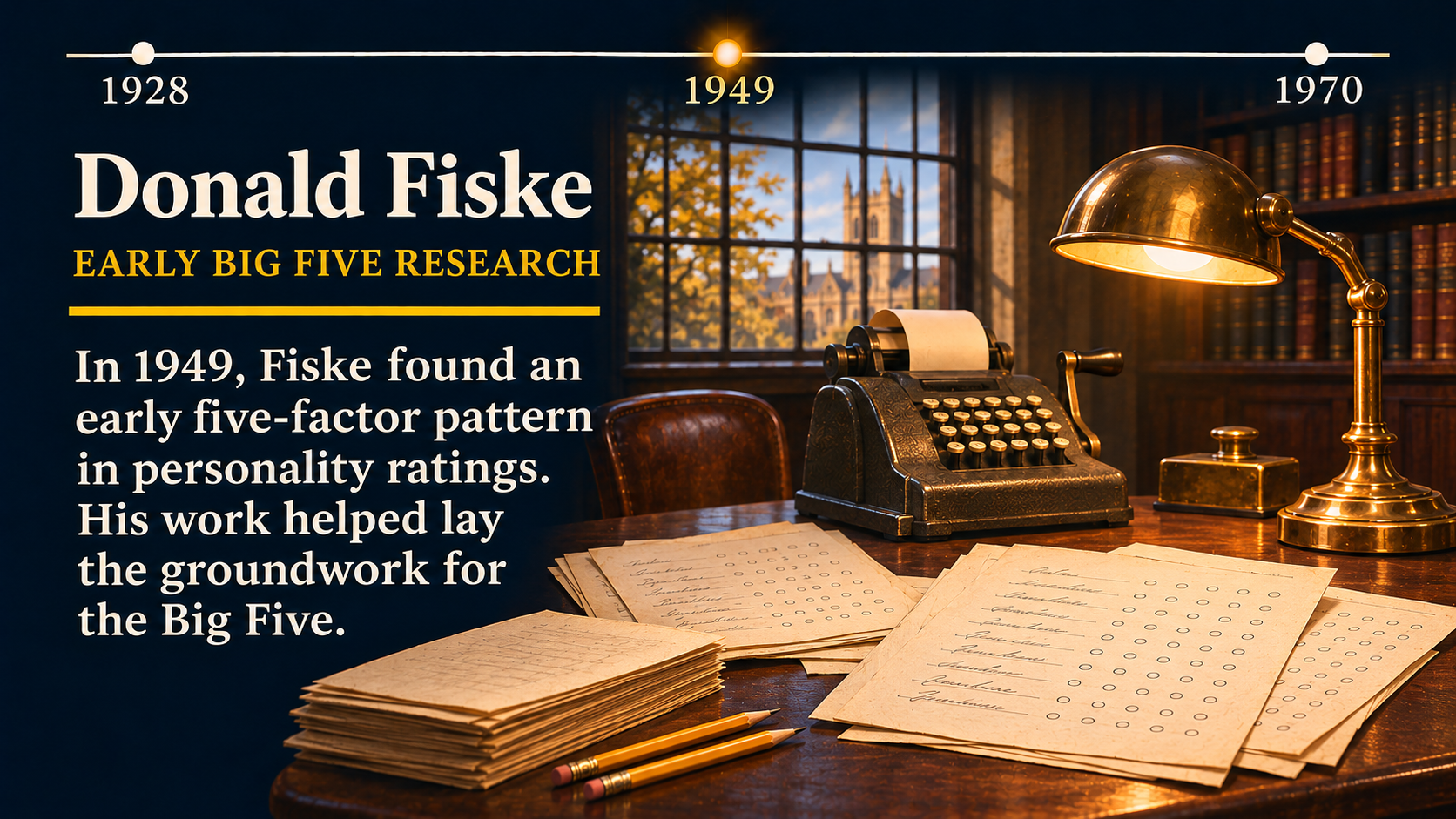
In 1949, Donald Fiske compared how people rated their own personalities with how others rated them. He found that ratings from different sources tended to cluster into five broad patterns. His findings helped lay the groundwork for the Big Five, a model that later researchers refined into five personality dimensions.
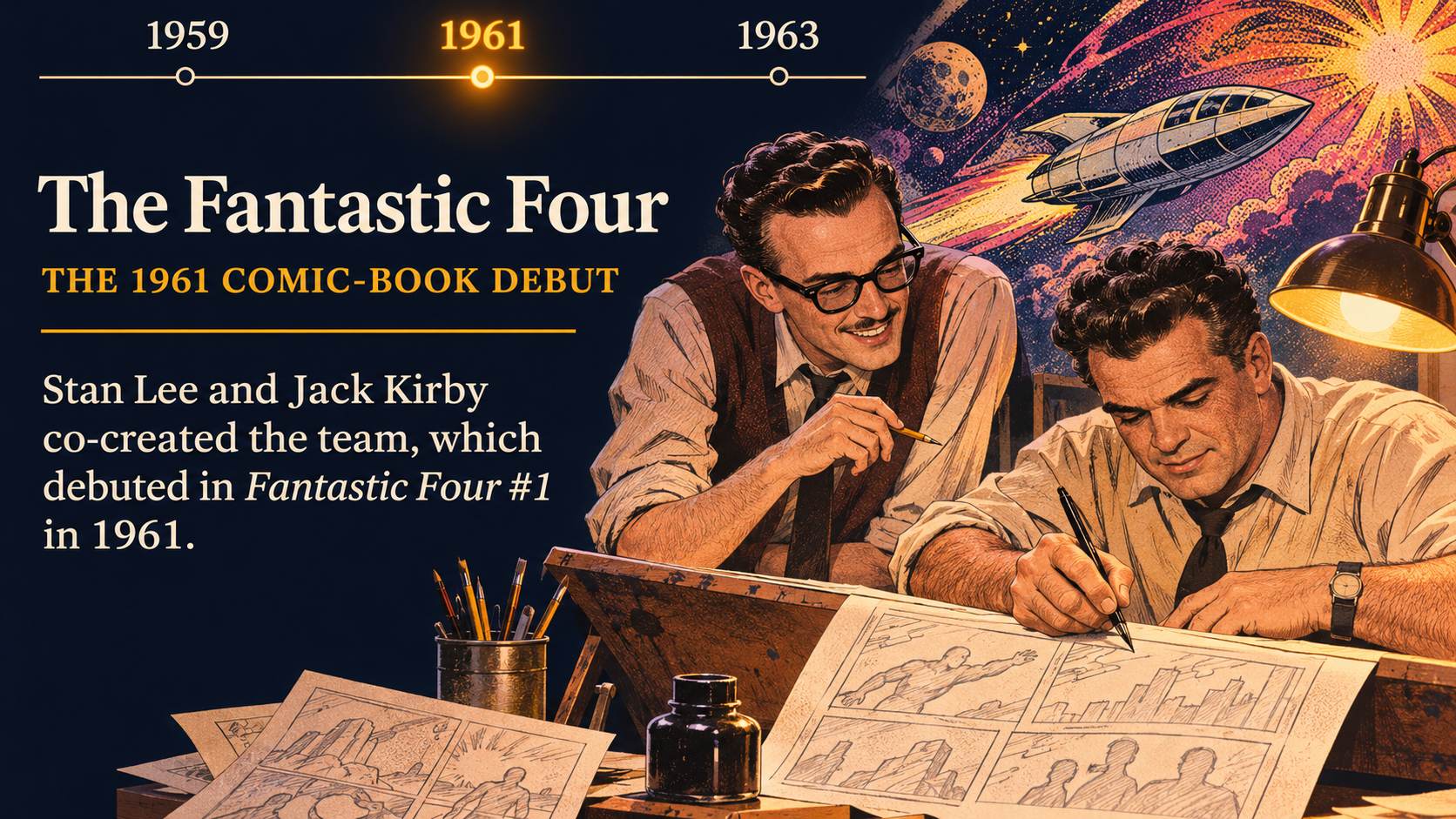
In 1961, Stan Lee and Jack Kirby introduced Marvel’s Fantastic Four. Each hero’s powers can be read as an echo of a classical element: the Thing’s rocky body evokes earth, the Human Torch embodies fire, the Invisible Girl suggests air, and Mister Fantastic’s ability to stretch and flow evokes water.
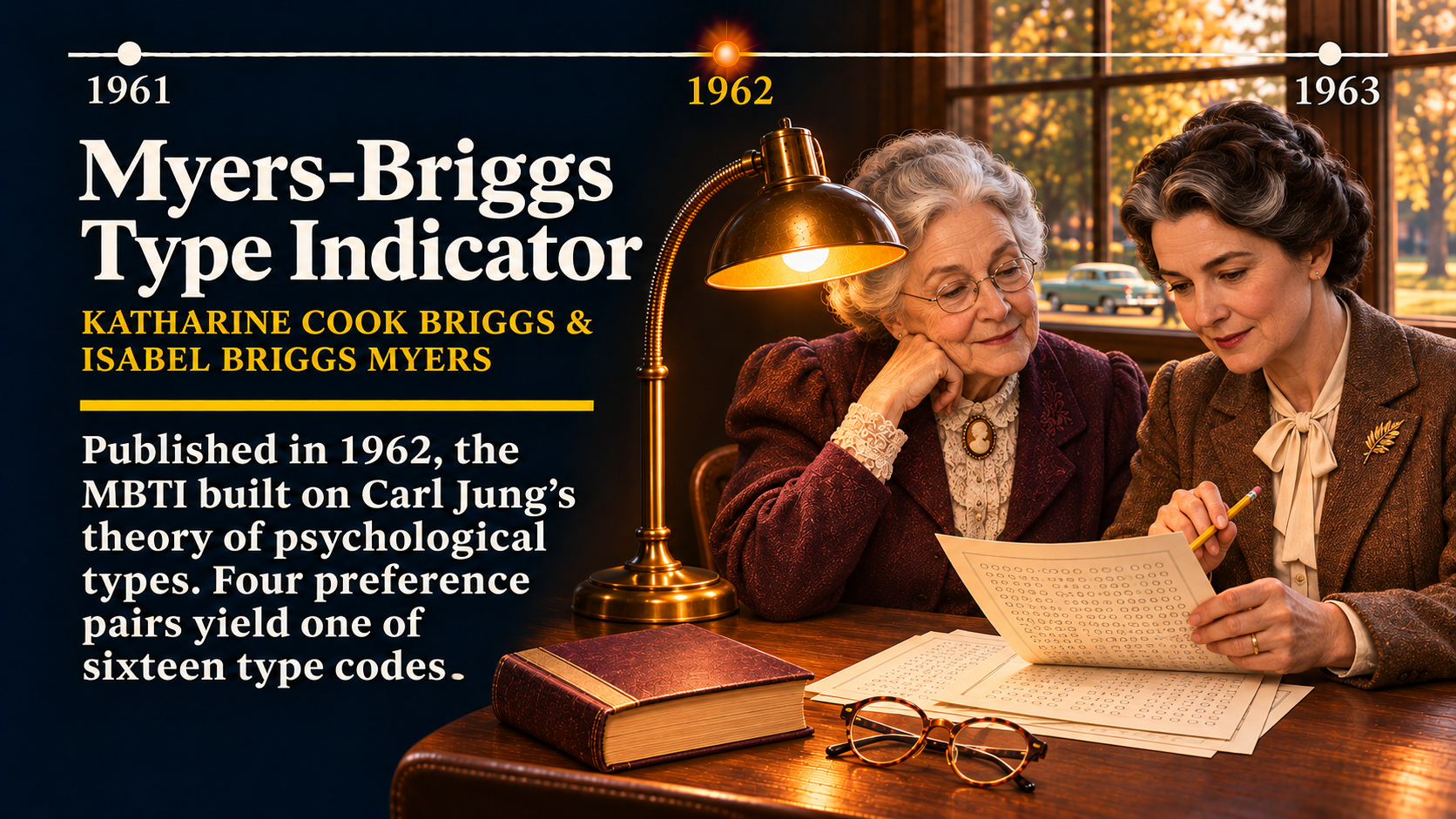
Katharine Cook Briggs and her daughter Isabel Briggs Myers turned Carl Jung’s theory of psychological types into a questionnaire. Published in 1962, the Myers-Briggs Type Indicator describes four pairs of preferences that combine into sixteen possible type codes. Their work gave people a shared vocabulary for discussing differences in personality.
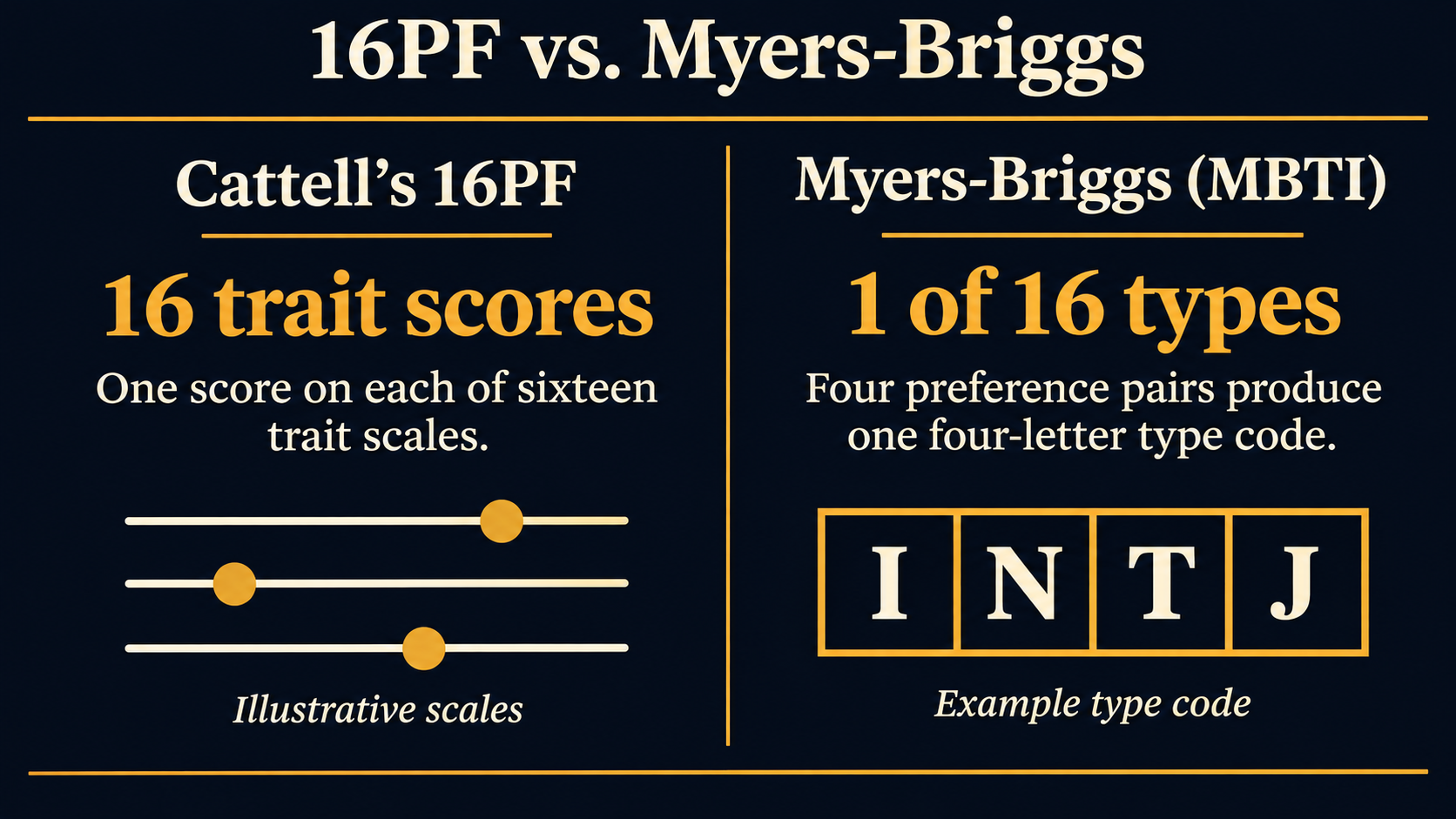
Raymond Cattell’s 16PF and the Myers-Briggs Type Indicator both use questionnaires to describe personality. The 16PF gives each person a score on sixteen trait scales. Myers-Briggs combines four preference pairs into one of sixteen possible type codes, such as INTJ. A 16PF profile shows how strongly each trait is expressed.
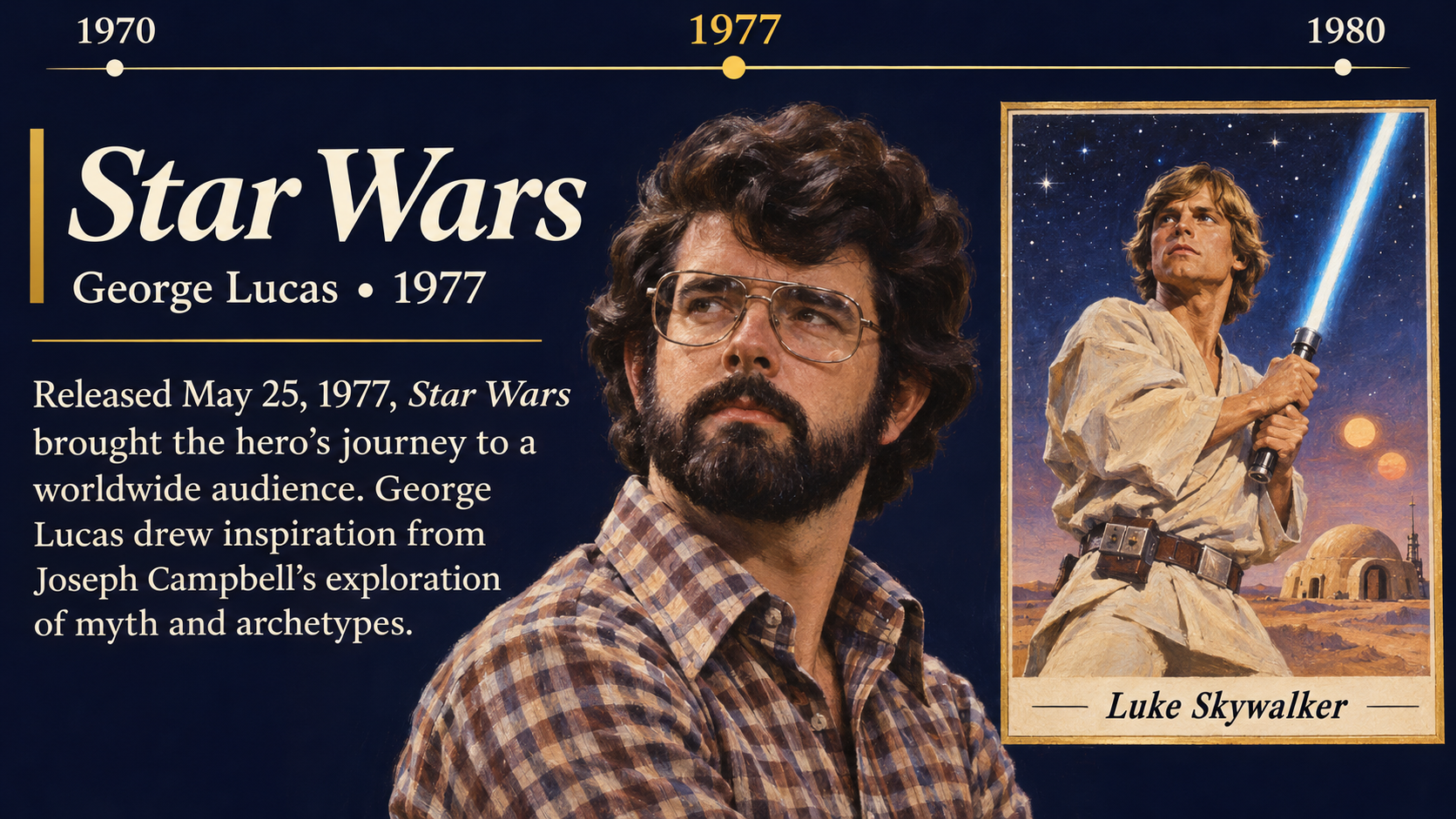
George Lucas launched Star Wars on May 25, 1977, bringing timeless archetypes into a futuristic setting. Inspired partly by Joseph Campbell’s hero’s journey, Luke Skywalker leaves home, meets a mentor, faces trials, and discovers his potential. The film illustrates how recognizable character patterns help audiences connect with stories and transformation.
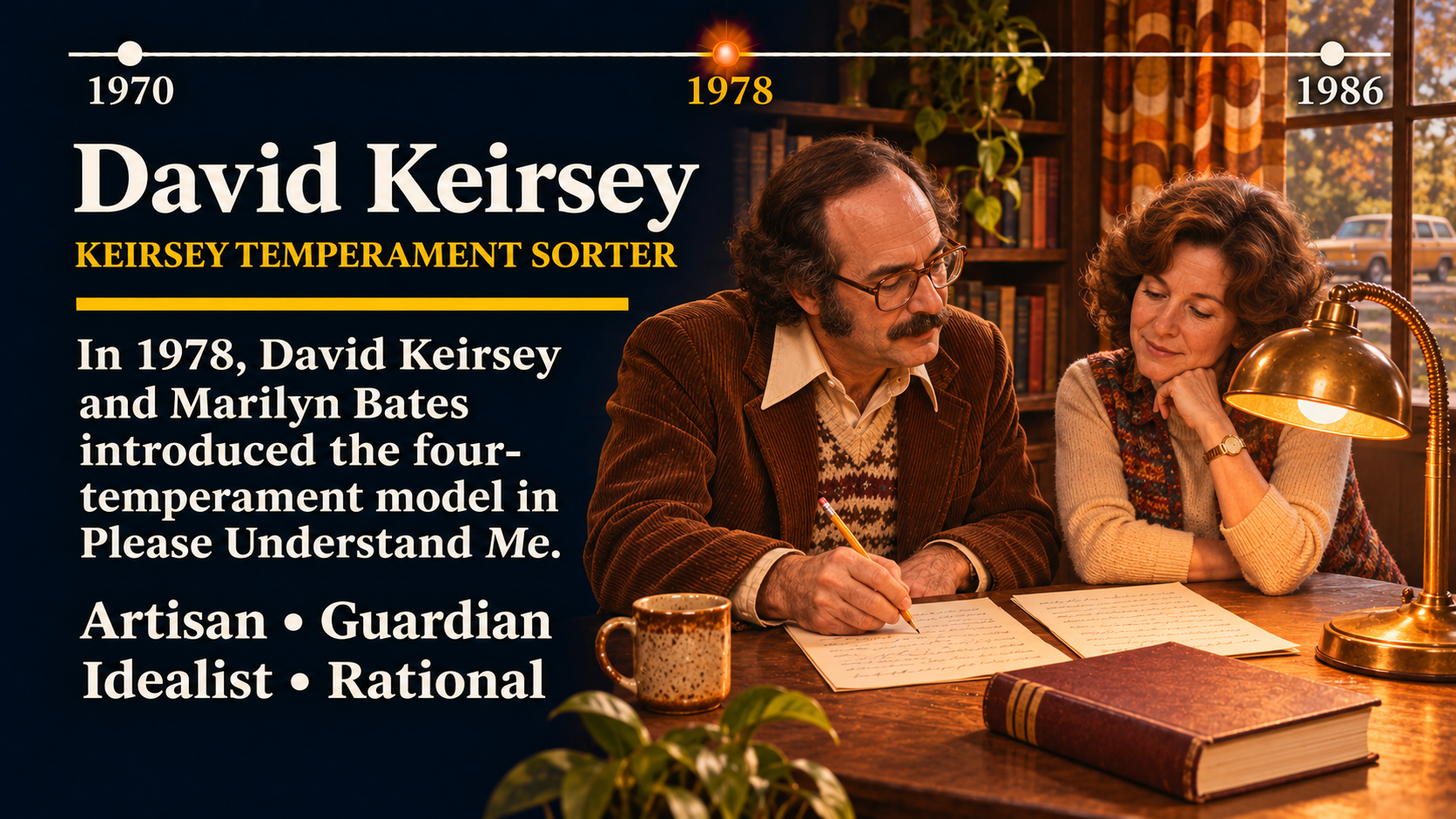
In 1978, David Keirsey and Marilyn Bates published Please Understand Me, introducing readers to the Keirsey Temperament Sorter. The model groups sixteen personality types into four temperaments now known as Artisan, Guardian, Idealist, and Rational. It looks at how people communicate and act to explain patterns they share within groups.
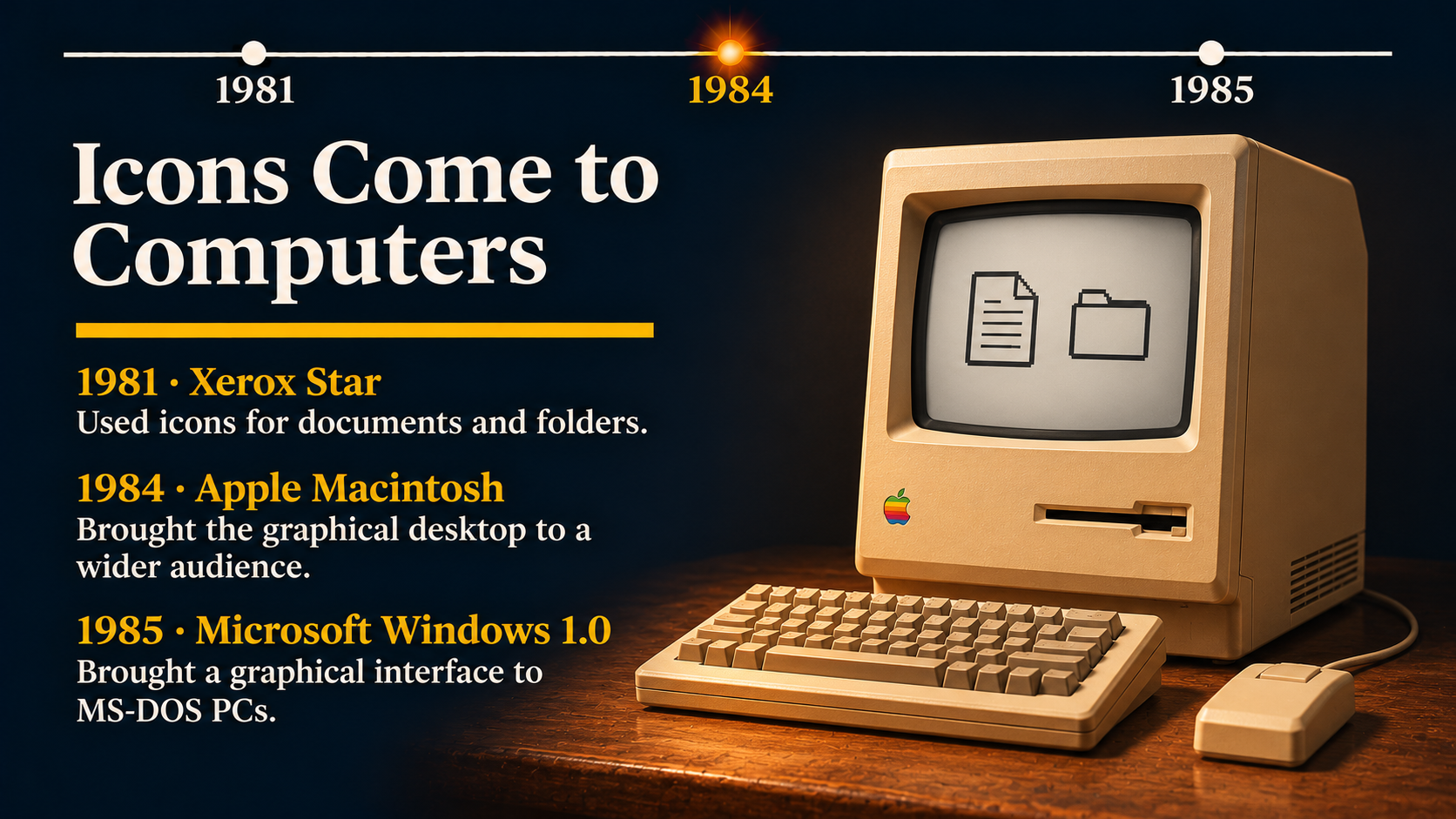
In 1981, the Xerox Star used on-screen icons to represent office objects like documents and folders. Apple’s Macintosh brought the graphical desktop to a wider audience in 1984. Microsoft followed in 1985 with Windows 1.0, bringing a graphical interface to MS-DOS PCs. Icons made files and tools easier to recognize.
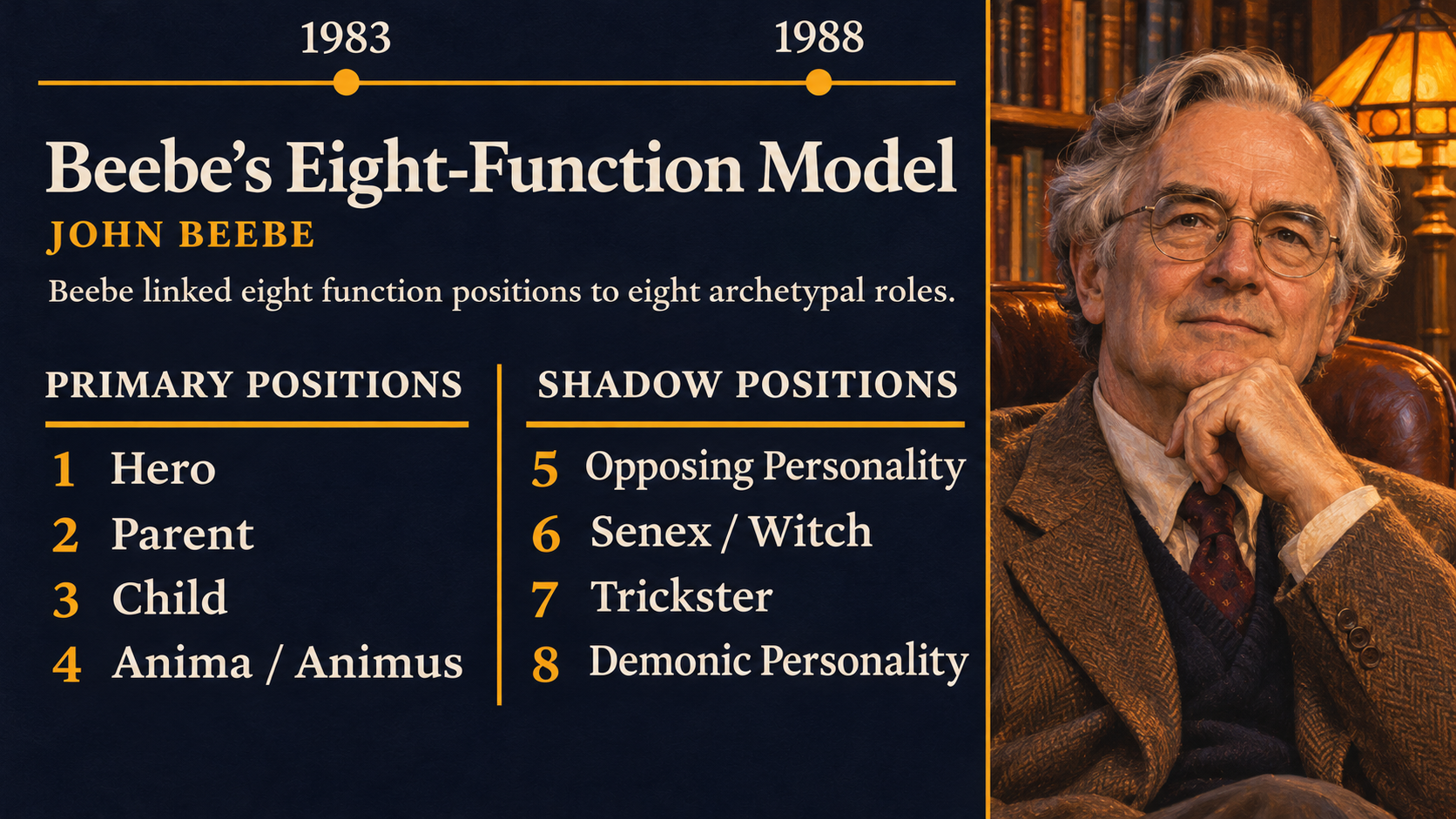
John Beebe presented four archetypal roles in 1983 and was teaching an expanded eight-function model by 1988. Building on Carl Jung’s theory, he linked each function position to a role. The Hero, Parent, Child, and Anima or Animus occupy the first four positions. The remaining four are called shadow positions.
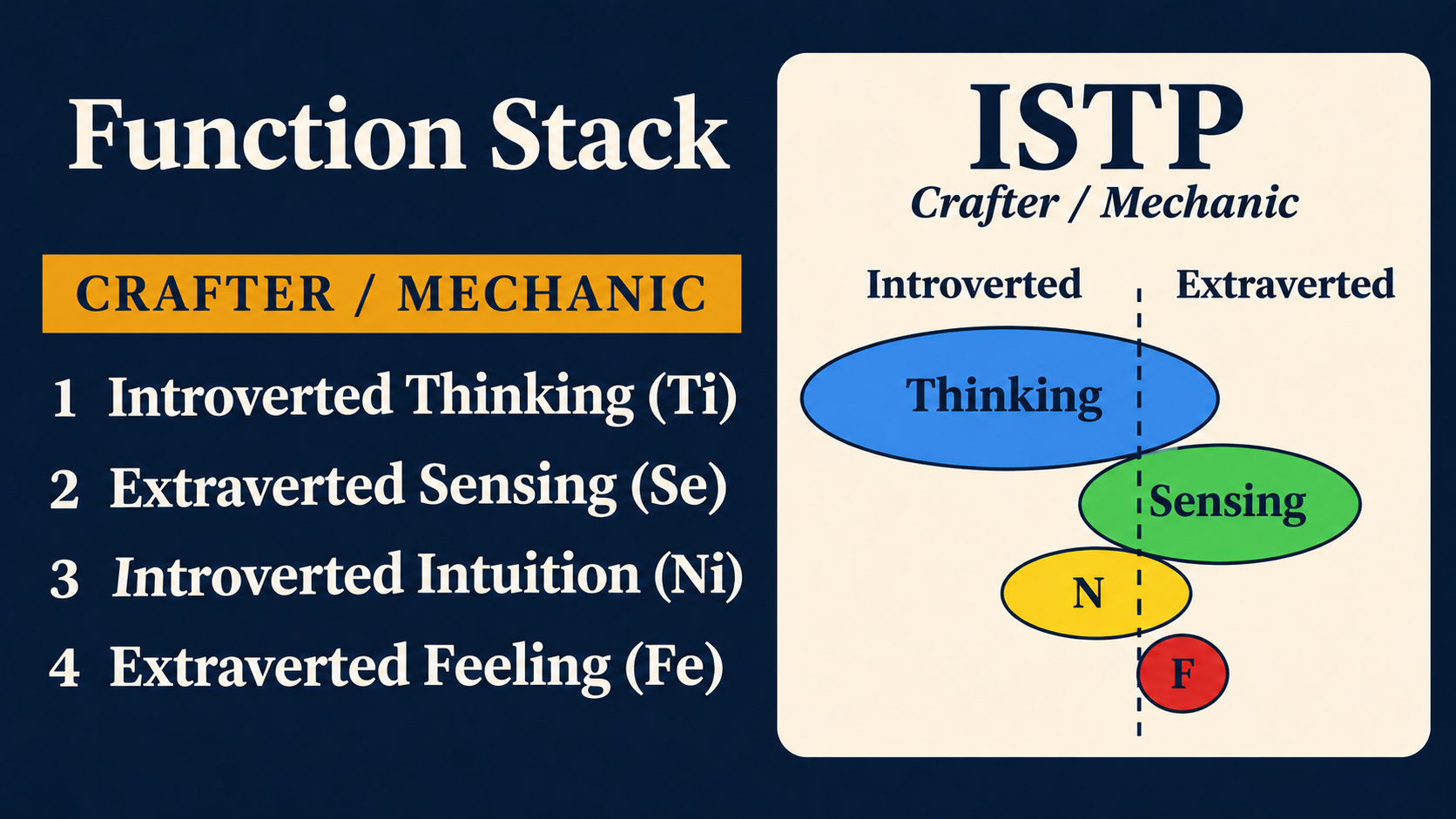
The function stack shows four cognitive functions in order. ISTP leads with introverted thinking, followed by extraverted sensing, introverted intuition, and extraverted feeling. The bubbles get smaller as you move down the stack. Their centers show orientation, with introverted functions on the left and extraverted functions on the right.
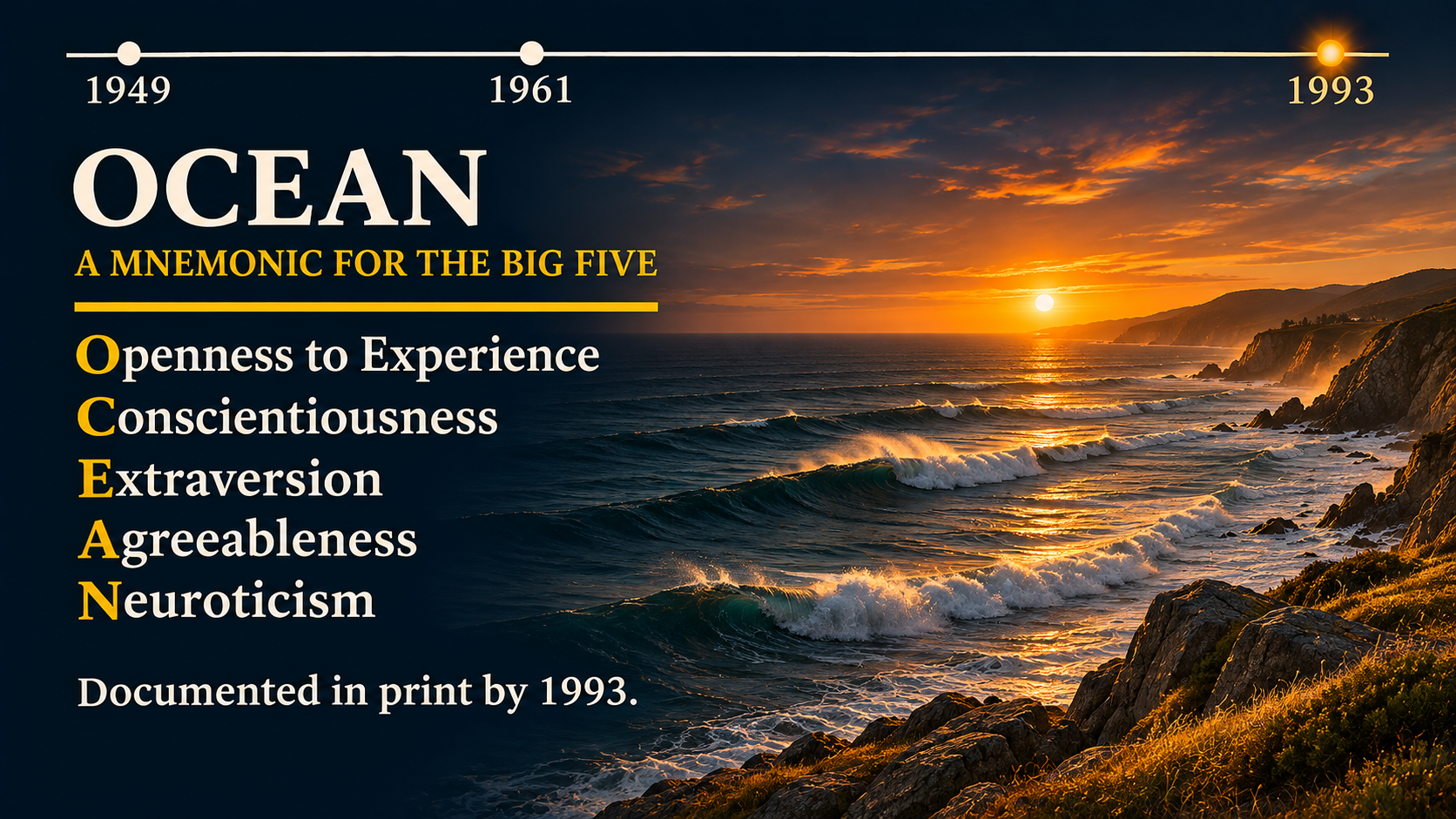
OCEAN helps you remember the Big Five personality traits: Openness to Experience, Conscientiousness, Extraversion, Agreeableness, and Neuroticism. The acronym was documented in print by 1993. Each trait is measured on a continuum, so two people can be equally outgoing yet differ in how organized or sensitive to stress they are.

In 1999, Gallup launched StrengthsFinder, an assessment developed by psychologist Donald Clifton and his team. Now called CliftonStrengths, it ranks thirty-four talent themes based on how people tend to think, feel, and behave. Themes such as Strategic, Learner, and Achiever give people a vocabulary for recognizing and developing their talents.
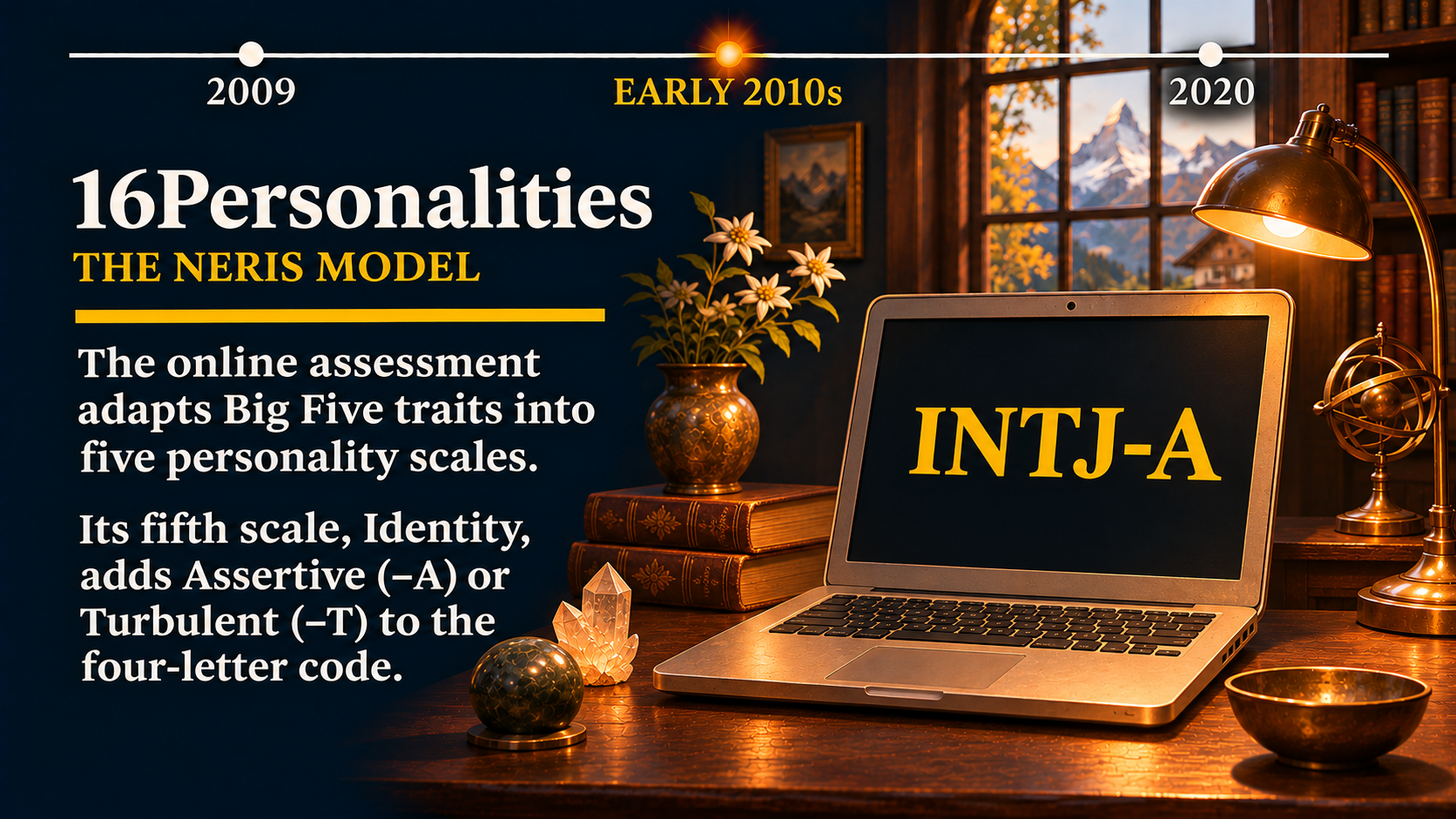
16Personalities emerged in the early 2010s with an online assessment based on its NERIS model. It adapts the Big Five into five scales. Four produce a familiar code such as INTJ. The fifth, Identity, adds Assertive (-A) or Turbulent (-T) to reflect differences in confidence and responses to everyday stress.
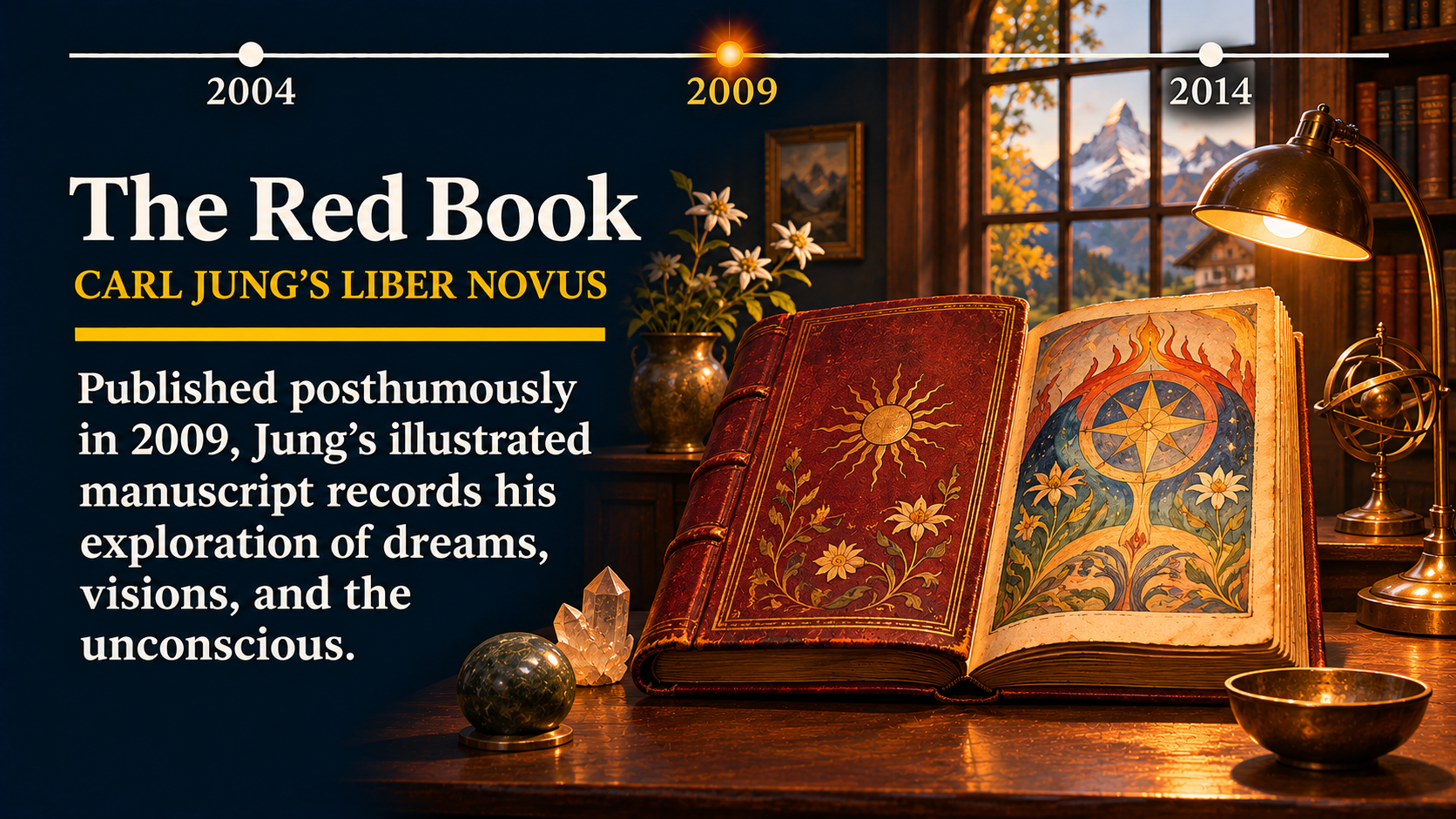
Carl Jung’s The Red Book, also known as Liber Novus, was first published in 2009, decades after his death. In its illustrated pages, Jung recorded visions and conversations with figures from his imagination. The manuscript gives readers a glimpse of how he explored the unconscious through writing and symbolic art.
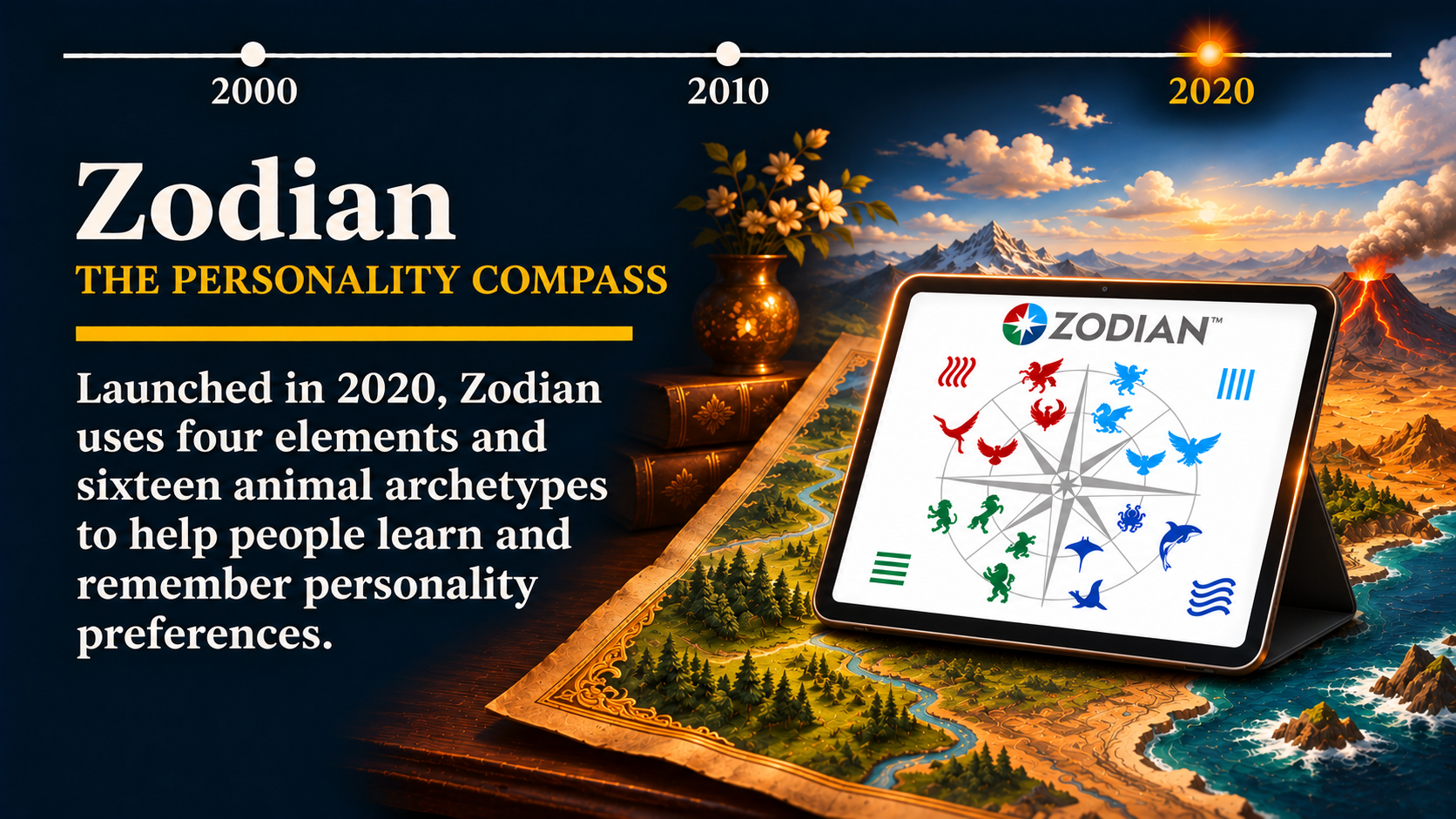
Launched in 2020, Zodian uses four elements and sixteen animal archetypes to make personality preferences easier to learn and remember. The Personality Compass groups four animals under each element: Earth, Water, Fire, and Air. Learners use the compass to explore how they gather information, make decisions, and interact with others. For example, the Owl represents a preference for using logic to make decisions. These archetypes give learners a shared vocabulary for discussing differences in personal relationships and on workplace teams.